
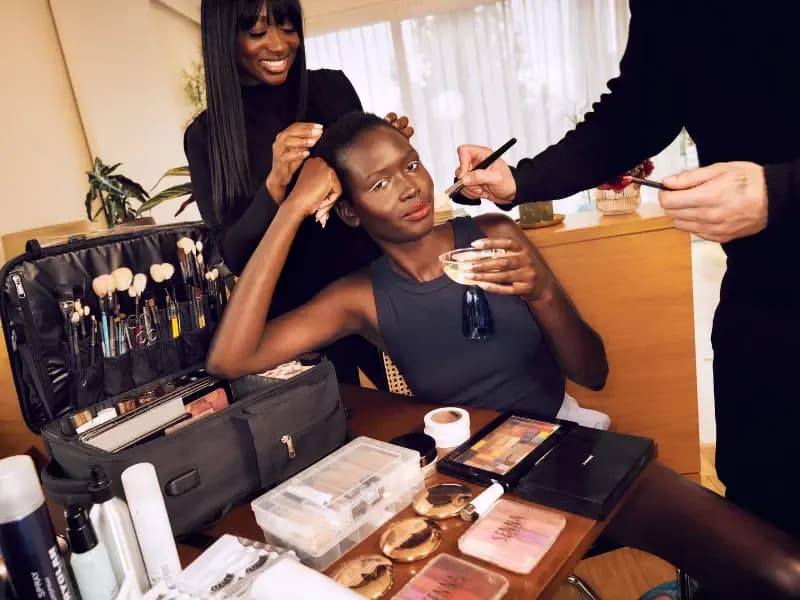
The beauty industry is undergoing a structural transformation that reaches well beyond new product launches and trending techniques. Across the United States, a growing number of licensed cosmetologists, makeup artists, and nail technicians are stepping away from traditional salon chairs and building careers around mobile beauty services that bring professional-grade treatments directly to clients. This shift is not a passing trend driven by novelty. It reflects fundamental changes in how beauty professionals define career success, how consumers prefer to receive services, and how technology has eliminated many of the barriers that once made salon employment the only viable path. Understanding why this migration is accelerating matters for anyone who books beauty appointments, whether you are searching for an at-home beauty services provider for a special occasion or considering a regular arrangement with a stylist who comes to your door.
The Financial Case for Going Mobile
Higher Earnings Through Independent Pricing
Salon-based professionals typically operate under one of two compensation models: commission splits that range from 40 to 60 percent of service revenue, or booth rental arrangements that require fixed weekly payments regardless of how many clients walk through the door. Both models cap earning potential in ways that become more constraining as an artist's reputation and client demand grow. A stylist who commands premium pricing still surrenders a significant percentage to the salon or pays the same rent, whether the week brings 10 clients or 30.

Mobile professionals set their own rates and retain the full service fee after expenses. A mobile hair stylist who charges a competitive rate for blowouts, color treatments, or bridal styling keeps every dollar earned after travel and product expenses. Independent beauty professionals who manage their own pricing and scheduling consistently report higher annual earnings than their salon-employed counterparts with equivalent experience levels.
Eliminating Overhead That Drains Salon Earnings
Traditional salons carry substantial fixed costs: commercial lease payments, utilities, front-desk staff, shared product inventory, insurance, and maintenance. These costs are embedded in the commission structure or rental fees that salon professionals pay. Mobile beauty providers replace commercial rent with mileage and invest in portable professional kits rather than contributing to a salon's overhead. The result is a leaner business model where a greater share of each dollar earned flows directly to the professional who performed the service.
Schedule Flexibility and Quality of Life
Designing a Work Schedule Around Personal Priorities
Salon employment typically requires adherence to the salon's operating hours, which often include evenings and weekends with limited flexibility for personal commitments. Professionals who transition to mobile work can design schedules that reflect their own priorities. A stylist who values weekday mornings with family can build a client roster that begins in the afternoon. An artist who prefers concentrated work blocks can schedule back-to-back appointments in the same neighborhood rather than waiting for walk-ins between booked sessions.
This flexibility extends beyond daily scheduling. Mobile professionals can adjust their availability seasonally, taking time off during slower months without negotiating with a salon manager or losing a coveted chair to a replacement stylist. The autonomy to control when, where, and how often they work is consistently cited as one of the primary reasons beauty professionals leave traditional employment.
Reducing Physical Strain and Career Longevity
Standing in a salon for eight to twelve hours on hard flooring takes a measurable toll on the body over the years. Repetitive motions in a fixed workspace contribute to back pain, joint issues, and fatigue that can shorten careers. Mobile professionals often work fewer but more focused hours, travel between appointments with built-in breaks, and set up in environments that allow more ergonomic positioning. For professionals seeking to extend their careers and avoid burnout, the mobile model offers a sustainable rhythm that salon schedules rarely allow. Those searching for an at-home hair stylist benefit from working with a professional who arrives rested and focused rather than fatigued from a long salon shift.
Ready to book your next appointment?
Book NowTechnology That Makes Mobile Careers Viable
Booking Platforms and Client Management Tools
A decade ago, running an independent beauty business required juggling phone calls, paper calendars, and manual payment processing. Today, integrated booking platforms handle scheduling, payment processing, client communication, and appointment reminders in a single interface. A mobile makeup artist can manage a full client roster from a smartphone, accept bookings around the clock, and maintain detailed client preference records that inform every appointment. Mobile and home-based salon services rose by 17 percent in recent years, driven in large part by the digital infrastructure that makes these businesses operationally seamless.
Social Media as a Portfolio and Marketing Engine
Instagram, TikTok, and Pinterest have replaced the salon storefront as the primary discovery channel for beauty professionals. A talented artist who posts consistent before-and-after content, behind-the-scenes process videos, and client testimonials can build a following that generates a steady stream of booking inquiries without paying for a prime retail location. This democratization of marketing means that skill and content quality matter more than geographic placement, leveling the playing field for mobile hair and makeup professionals who operate without a fixed address.
Market Growth Driving Professional Opportunity
Consumer Demand Is Accelerating the Shift
The professional beauty services market is projected to grow from approximately 248 billion dollars in 2026 to over 430 billion dollars by 2034. Within that expansion, on-demand beauty services represent one of the fastest-growing segments. Beauty-on-demand platforms are facilitating over 5.5 million appointments monthly in top urban cities, reflecting consumer appetite for services delivered outside the traditional salon environment. This demand creates an opportunity for professionals who are positioned to meet it.
The shift is particularly pronounced in metropolitan areas where time scarcity is highest. Professionals in cities like New York, Los Angeles, Chicago, and Miami find that clients actively prefer the convenience of in-home beauty services over salon visits that require commuting, parking, and waiting. This preference is not limited to luxury clients. Working professionals, new parents, elderly clients with mobility challenges, and anyone managing a packed schedule represent a growing market for mobile beauty. Glamsquad's guide to at-home beauty services illustrates how straightforward the booking process has become for consumers in major markets.

How On-Demand Platforms Eliminate the Barriers to Going Mobile
Steady Client Flow Without Personal Marketing
One of the biggest challenges for any professional leaving a salon is building a client base from scratch. On-demand platforms solve this problem by connecting vetted professionals with a steady stream of booking requests. Instead of spending months cultivating referrals and building social media followings, a mobile hair and makeup artist can join a platform and begin serving clients immediately. Glamsquad's network of licensed professionals averages 7 years of experience and undergoes thorough vetting before joining the platform, ensuring the platform maintains the quality standards clients expect.
Infrastructure That Handles the Business Side
Running an independent beauty business requires more than talent with a brush or shears. It demands invoicing, payment processing, insurance coordination, and customer service management. Platforms absorb many of these administrative functions, allowing the professional to focus on the craft itself. For a mobile nail technician or a traveling stylist, this support can mean the difference between a sustainable business and one that collapses under the weight of administrative burden.
The Competitive Advantages Mobile Professionals Hold
Mobile beauty professionals enjoy several distinct advantages over their salon-based counterparts that contribute to both career satisfaction and service quality. These advantages extend across financial, operational, and relational dimensions of the profession.
- Geographic reach beyond a single neighborhood. A salon serves clients within its immediate area, but a mobile professional can cover an entire metropolitan region. A hair and makeup artist comes to your home provider, who serves multiple zip codes and has a client pool that no single salon location could match, translating into higher booking volume and greater income potential.
- Personalized service environments. Every appointment takes place in a setting the client has chosen, whether that is their living room, a hotel suite before a gala, or a bridal suite on the wedding morning. This personalization elevates the experience in ways that a standardized salon interior cannot replicate.
- Adaptive specialization. Mobile professionals can pivot their service offerings based on market demand without renegotiating a lease or redesigning a physical space. A stylist who notices growing interest in in-home hair stylist services for corporate events can add that vertical to their portfolio overnight, something a salon-bound professional cannot do without owner approval.
- Recession resilience through low fixed costs. During economic downturns, salons with high rents and large staffs face existential pressure. Mobile professionals with minimal overhead can adjust pricing, reduce their service radius, or shift their schedule without risking default on a commercial lease.
- Direct brand ownership. Every review, every social media post, and every referral builds the individual professional's reputation rather than contributing to a salon's brand equity. This direct ownership of professional reputation creates compounding value over time that the professional retains regardless of future career decisions.
These advantages explain why the migration toward mobile work continues to accelerate even as the broader salon industry grows.
Ready to book your next appointment?
Book NowWhat the Mobile Beauty Movement Means for Consumers
Access to Experienced Professionals Without the Salon Visit
As more skilled professionals move into mobile work, the talent pool available outside of salons deepens considerably. Clients who compare mobile beauty services with traditional salons are increasingly finding that the mobile option offers equivalent or superior skill levels without the inconvenience of traveling to a fixed location. The professionals choosing mobile careers are not leaving salons because they lack ability. They are leaving because the mobile model better rewards their expertise and gives them greater control over their professional lives.
Convenience That Fits Modern Lifestyles
The reasons consumers choose at-home beauty services mirror the reasons professionals choose to offer them: flexibility, personalization, and efficiency. A working parent who cannot carve out two hours for a salon visit can book a mobile stylist during a child's nap time. A professional preparing for a high-stakes presentation can have a makeup artist arrive at the office. Understanding why beauty professionals go mobile helps consumers recognize that the artists showing up at their door are often the most motivated and client-focused professionals in the industry.
The Future of the Industry Is Already Here
A Permanent Industry Restructuring
The movement toward mobile beauty is not a temporary reaction to external circumstances. It is a permanent restructuring of how beauty services are delivered and consumed. The mobile beauty industry growth trajectory shows no signs of slowing. On-demand and mobile service models will continue to claim a larger share of the professional beauty market through the end of the decade.

For professionals evaluating their career options, the data is clear: mobile beauty offers higher earning potential, greater schedule control, deeper client relationships, and a business model that scales with skill rather than overhead. For consumers, this shift means better access to talented professionals, more convenient service delivery, and a beauty experience that happens on their terms. Platforms like Glamsquad sit at the intersection of these trends, providing the infrastructure that makes mobile careers viable for professionals and mobile beauty accessible for clients. Explore available services on their booking platform and discover what the benefits of mobile beauty for stylists mean for the people they serve.
The professionals who are redefining the industry are not abandoning their craft. They are taking it directly to the people who value it most, and in doing so, they are building a future where exceptional beauty services are no longer confined to the four walls of a salon. Whether you seek a freelance beauty professional advantages story for career inspiration or you simply want a great blowout without leaving home, the mobile beauty revolution has something to offer.
Sources
- Square. (2025). Top beauty industry trends in 2025. SquareupThe Top Beauty Industry Trends in 2025
- Fortune Business Insights. (2025). Professional beauty services market size, share, and growth forecast 2024-2034. FortunebusinessinsightsProfessional Beauty Services Market Size, Share | Growth [2034]
- Future Market Insights. (2025). Salon services market size, growth, and report analysis 2025-2035. FuturemarketinsightsSalon Service Market Size & Forecast 2025 to 2035
- Grand View Research. (2025). Professional beauty services market size report, 2030. GrandviewresearchProfessional Beauty Services Market Size Report, 2030
- Market.us. (2025). Professional beauty services market size 2025-2035. MarketProfessional Beauty Services Market
- DemandSage. (2026). Beauty industry statistics 2026: Cosmetic market size. DemandsageBeauty Industry Statistics 2026 [Cosmetic Market Size]